
Low Volume Production
Low volume production fills the gap between prototyping and mass production. Typical batch size 50–10,000 parts. Used for pre-launch market trials, pilot builds, bridge orders while hard tooling is being cut, and end-of-life service parts where mass production no longer makes sense
Overview

Low volume production needs different process choices than prototyping or mass production. A 200-piece run of CNC-machined parts works at this volume; a steel injection mold doesn’t pay back until 10,000+ shots. Aluminum tooling, soft tooling, and 3D printing all sit in this middle zone.
Common processes at low volume: CNC machining (any quantity, scales linearly), aluminum-tool injection molding (500–10,000 shots per tool), vacuum casting (up to 100 PU parts per silicone mold), sheet metal fabrication (any quantity), and SLS/MJF 3D printing for end-use plastic parts (10–500 units economical). Process choice usually comes down to per-part cost versus tooling cost, the breakeven point shifts with batch size.
Typical customers include automotive teams running pre-production jigs and fixtures, medical device programs building pilot units for clinical validation, and consumer electronics brands launching crowdfunding batches before committing to hard tooling.
Typical Applications

Concept Models
A CNC machined concept model helps teams review part geometry against engineering drawings. Use it during prototype development to check form, accessible features, and design changes before production.

Functional Prototypes
CNC prototyping produces functional aluminum housing parts for checking mounting features and component interfaces. Prototype manufacturing in the intended material helps engineers identify changes before a production run.

Engineering Validation
Dimensional inspection compares CNC machined features with the drawing. These measurements support design verification of critical dimensions before assembly or further production.

Fit & Assembly Testing
Fit testing checks how a mating pin enters a machined bore. A trial mechanical assembly can reveal alignment, insertion, or clearance issues before parts are ordered in larger quantities.

Market Testing Samples
Small batches of near-final CNC machined product samples give customers physical parts for product evaluation, fit checks, and feedback before broader product testing or launch decisions.

Bridge Production
Low volume manufacturing keeps CNC machined parts available while production plans and bridge tooling are finalized. Repeatable small batches help teams move from prototype to production.
Process Flow
Cost Considerations
Process choice drives the per-part cost more than anything else at low volume. CNC-machined aluminum at 200 pieces runs $30–80 each. The same part in aluminum-tool injection molding runs $3–8 each but adds $8,000–15,000 in tooling upfront. The breakeven sits around 1,500–2,500 parts depending on geometry.
Tooling amortization is the trap. A $12,000 aluminum tool on a 500-part order adds $24 per piece. The same tool on a 5,000-part order adds $2.40 per piece. Order quantity has more leverage on per-part cost than picking a cheaper material or finish
Batch Size & Volume Range
50–10,000 parts covers most low volume runs; below 50 falls into prototyping, above 10,000 needs hard tooling
Process Selection (CNC / Aluminum Tooling / Vacuum Casting / Sheet Metal)
CNC scales linearly; aluminum tooling runs 500–10,000 shots; vacuum casting up to 100 PU parts per silicone mold
Tooling Amortization
A $12,000 aluminum tool adds $24/piece on 500 parts but only $2.40/piece on 5,000, order quantity beats material savings
Surface Finish & Secondary Operations
Anodize, powder coat, plating, and PEM insert installation each add 1–3 days to the batch timeline
Quality Documentation (FAI, PPAP, ISIR)
AQL Level II sampling by default; full PPAP available on request for automotive, medical, and aerospace customers
Packaging & Logistics
Bulk packaging for industrial parts, retail packaging for consumer goods; air freight for urgent, sea freight for cost-sensitive
Recommended Capabilities

CNC Machining

Rapid Injection Molding

Vacuum Casting

Sheet Metal Fabrication

Additive Manufacturing

Surface Finishing

Related Case Studies
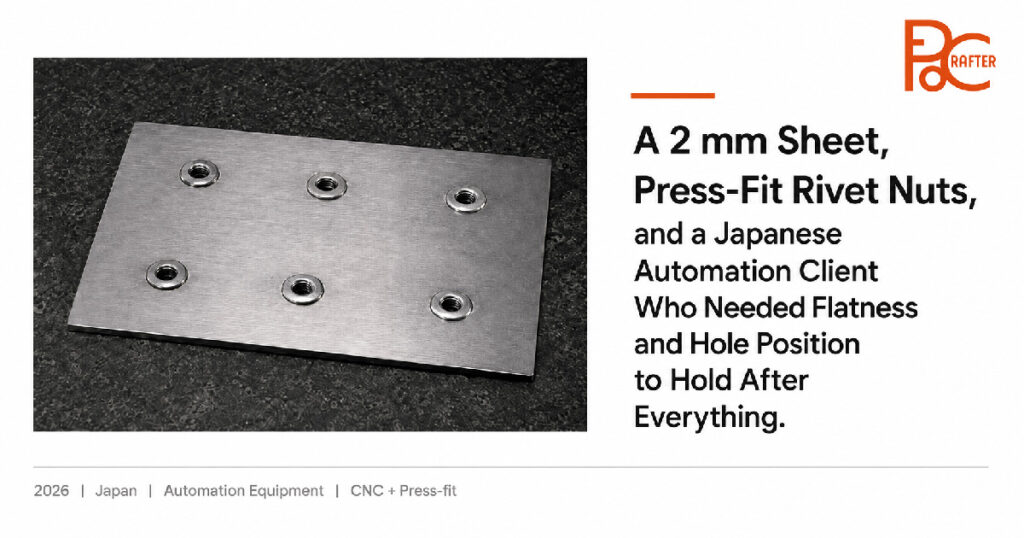
Press-Fit Rivet Nut Installation in a 2 mm SPHC Sheet: How We Held Flatness ≤ 0.08 mm for a Japanese Automation Buyer
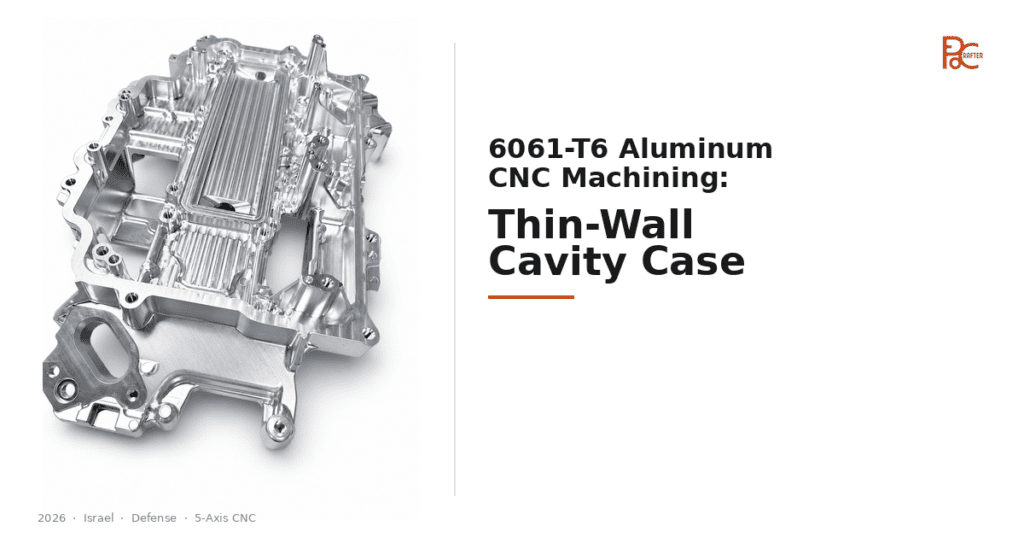
How a 300×280×260mm 6061-T6 Aluminum CNC Machining Cavity Held 0.04mm Flatness Across Six Faces
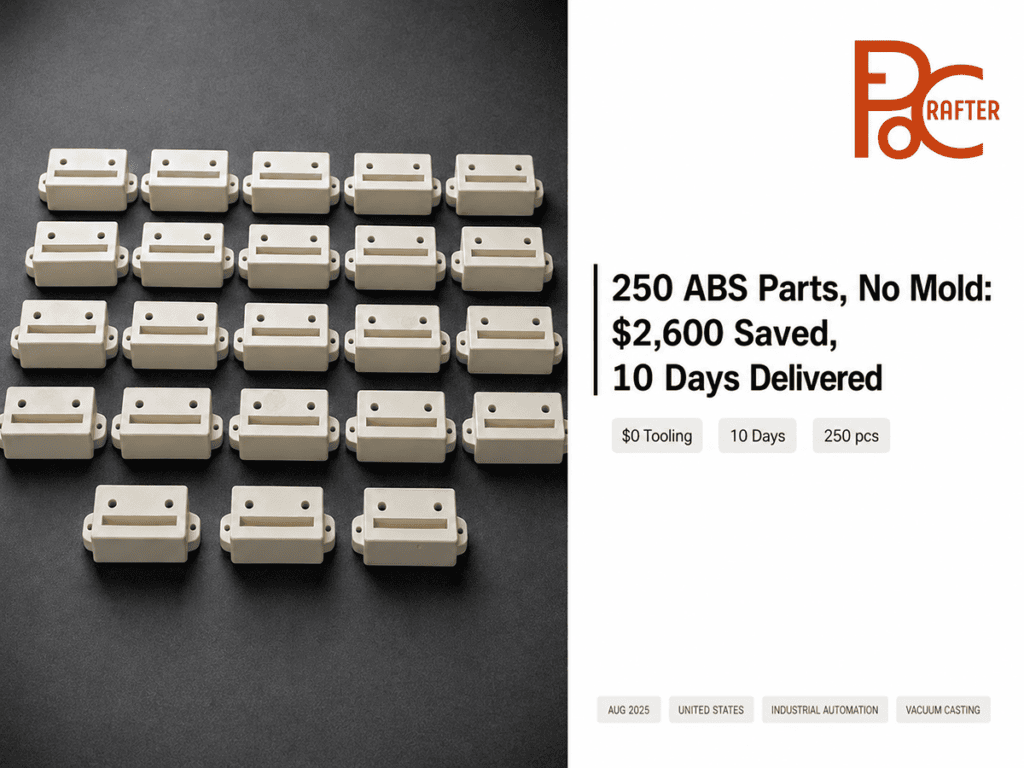
Cast Urethane Parts, No Steel Mold: A 250-Piece Case for an Automation Client

CNC Machined Aluminum Parts: 160-Piece Order from CAD to Europe in 9 Days

Stainless Steel CNC Machining: How We Held 0.018 mm Profile on a 316L Cantilever S-Hook

Anodized Aluminum Parts for EV Interior Trim: A 6063 Console Panel That Cleared German CMF Review
Why Work With EPOC CRAFTER
Prototyping shops usually run one or two processes. A CNC house can’t pour PU resin; a 3D print bureau can’t bend sheet metal. Project that needs three different processes ends up split across three vendors, with three lead times and three sets of shipping costs.
Epoc Crafter runs CNC, 3D printing, vacuum casting, sheet metal, and prototype injection molding under one roof. One quote, one project manager, one delivery date. When the bracket needs to ship with the housing and the housing needs to ship with the silicone seal, all three come from the same building

Ready to Run Your First Production Batch?
50 to 10,000 parts. CNC, aluminum-tool injection molding, vacuum casting, and sheet metal under one roof. One quote covers process, tooling, finishing, and shipping.
Ready to scale beyond 10,000 parts? See Production Tooling →
Low Volume Production: Common Questions
Questions that come up before most first production orders.
It depends on the process. CNC machining and sheet metal fabrication start at 1 part, though batches of 50 or more get better per-part pricing. Vacuum casting starts at 10 parts per mold pour. Aluminum-tool injection molding starts at 500 parts because tooling cost needs a minimum quantity to make sense. SLS and MJF 3D printing for end-use parts runs economically at 10 to 500 units. If your target quantity is below 50, the Rapid Prototyping page covers the right route.
200 machined aluminum parts: CNC. 2,000 ABS plastic housings: aluminum-tool injection molding. 50 PU enclosures with complex geometry: vacuum casting. 500 sheet metal brackets: sheet metal fabrication. The breakeven between CNC and aluminum-tool injection molding sits around 1,500 to 2,500 parts depending on geometry. Below that breakeven, CNC wins on total cost. Above it, injection molding wins on per-part cost. We run this calculation during DFM review and recommend the process before quoting. More detail on the DFM Design Guidelines page.
STEP or IGES for CNC and injection-molded parts. DXF or DWG for sheet metal flat patterns. STL or 3MF for 3D printing. Add a 2D drawing with GD&T callouts for any features with tight tolerances. A 3D file alone is enough to start a DFM review and return a process recommendation with indicative pricing. Final quote locks after tolerances and finish are confirmed.
Yes. NDA signed before any file review. All files stored on access-controlled servers. Engineers on the project sign confidentiality agreements. Customer files are never shared with third parties or reused as geometry reference for other jobs. Because all processes run in-house, your design does not leave the building to an external subcontractor. Full policy on the Security & Compliance page.
CNC machining a 200-piece run: 10 to 15 days. Sheet metal batches of 100 to 500 parts: 10 to 14 days. Vacuum casting first 25 parts: 7 to 10 days, then scales by mold count. Aluminum-tool injection molding: 3 to 4 weeks for tooling plus 1 week per 5,000 parts. If you have a deadline, put it in the quote request and we confirm capacity before committing. Rush routing is available on CNC and sheet metal.
Aluminum tooling for injection molding runs $8,000 to $15,000 depending on part complexity and cavity count. That cost is a one-time charge spread across the production batch. On a 500-part order, tooling adds $16 to $30 per part. On a 5,000-part order, it adds $1.60 to $3 per part. The tool handles 10,000 to 50,000 shots before wear becomes a factor, so reorders on the same design cost only part price with no additional tooling. Tooling cost and amortization schedule are stated in the quote before manufacturing starts.
First article inspection report on the first production run. PPAP Level 3 documentation on request for automotive customers. ISIR available for medical device programs. AQL sampling inspection on all batches at Level II (critical AQL 1.0, major AQL 2.5, minor AQL 4.0). Material certificates, RoHS and REACH declarations, and country-of-origin paperwork prepared for each shipment. Mid-run inspection at 25%, 50%, and 75% batch completion catches drift before it affects the full order. Full certification details on the Quality & Certifications page.
Parts ship from Shenzhen via DHL, FedEx, or UPS for smaller batches. Air freight for orders above 50 kg. Sea freight available for cost-sensitive large batches where lead time allows. Drop-ship direct to end customer, distribution warehouse, or fulfillment center. We prepare HS codes, commercial invoices, packing lists, and country-of-origin documentation. US customers can route through the North Carolina address for simpler domestic handling. Duties and import taxes are the buyer’s responsibility.
Wire transfer (T/T), PayPal, and major credit cards. Orders without tooling: full payment before production starts. Orders with tooling: 50% deposit before tooling starts, 50% balance before shipment. Established accounts with order history can request net-30 terms. All payment terms confirmed in the quote before any work begins.