Vacuum Casting
Vacuum casting copies a master pattern into PU resin parts using a silicone mold. 15–25 parts per mold. Faster than cutting steel tooling for injection molding, cleaner surface than FDM or SLA prints. The go-to process for 10–50 unit runs that need to look like production parts. For design best practices, see our Vacuum Casting DFM Guidelines.
Vacuum Casting Capabilities
| Feature | Description |
| Maximum Part Size | 1900×900×750mm depending on chamber size |
| General Tolerances | ±0.15% of nominal dimension/Minimum ±0.3mm on features over 100mm |
| Precision Tolerances | ±0.1mm on parts under 100mm with controlled mold temperature and degassing |
| Mold Life | 1–25 pcs per mold/Multi-mold runs up to 100 pcs total |
| Standard Lead Time | First parts in 7–10 business days(master pattern 3–5 days, silicone mold cure 1 day, then casting) |
| Post-Processing | Surface Finishing |
| Type | Material | Service | Process | More Info |
| ABS-Like | PU-like ABS | Vacuum Casting / RIM | Vacuum Casting | Data Sheet | Selection Logic |
| Transparent Resin / PU | Transparent PU | Vacuum Casting / RIM | Vacuum Casting | Data Sheet | Selection Logic |
| Rubber-Like Elastomer | Rubber-like PU | Vacuum Casting / RIM | Vacuum Casting | Data Sheet |
| Silicone | Silicone | Vacuum Casting / RIM | RIM / Silicone | Data Sheet |
| ABS-Like | DPI 8150 | Vacuum Casting | Vacuum Casting | Data Sheet |
| ABS-Like (Impact Resistant) | DPI 8158 | Vacuum Casting | Vacuum Casting | Data Sheet |
| ABS-Like (Impact Resistant) | DPI 8166 | Vacuum Casting | Vacuum Casting | Data Sheet |
| ABS-Like (Flame Retardant) | DPI 8263 | Vacuum Casting | Vacuum Casting | Data Sheet |
| TPE-Like (Soft) | DPI 8400 | Vacuum Casting | Vacuum Casting | Data Sheet |
| ABS-Like (Heat Resistant) | DPI 6160 | Vacuum Casting | Vacuum Casting | Data Sheet |
| ABS-Like | DPI MU-55 | Vacuum Casting | Vacuum Casting | Data Sheet |
| ABS-Like (Low Pressure) | DPI 1818 | Vacuum Casting | Low-Pressure Infusion | Data Sheet |
| PA6+GF-Like | DPI 2180 | Vacuum Casting | Vacuum Casting | Data Sheet |
| PP+Talc-Like | DPI 5690 | Vacuum Casting | Vacuum Casting | Data Sheet |
| ABS-Like | PX 5118 | Vacuum Casting | Vacuum Casting | Data Sheet |
| PMMA-Like | PX 5210 | Vacuum Casting | Vacuum Casting | Data Sheet |
| PMMA-Like | PX 521 | Vacuum Casting | Vacuum Casting | Data Sheet |
| PC-Like | PX 527 | Vacuum Casting | Vacuum Casting | Data Sheet |
| POM-Like | PX 225 | Vacuum Casting | Vacuum Casting | Data Sheet |
| ABS-Like (Heat Resistant) | PX 223 | Vacuum Casting | Vacuum Casting | Data Sheet |
| PP-Like | PX 215 | Vacuum Casting | Vacuum Casting | Data Sheet |
| PC-Like | PX510 | Vacuum Casting | Vacuum Casting | Data Sheet |
(Coming Soon)
Vacuum Casting Process
1.CAD DESIGN

Customer provides 3D CAD model or we support design optimization.
2.MASTER PATTERN

CNC machining or 3D printing to create a high-precision master pattern.
3.SILICONE MOLD MAKING

Liquid silicone is poured around the master pattern and cured, then the mold is cut and the master removed.
4.VACUUM CASTING

Polyurethane resin is mixed, degassed under vacuum, and poured into the mold under vacuum.
5.CURING

Molded parts are heat-cured to achieve optimal mechanical properties.
6.TRIMMING & DEMOLDING

Parts are removed from the mold and trimmed of any gates or flash.
7.SURFACE FINISHING

Painting, texture, silk screen, pad printing, laser marking, chrome plating, or other finishes as required.
8.INSPECTION & DELIVERY

Each part is inspected for quality and dimensions before carefully packed and delivered.
Material Selection Guidance
Pick the PU resin based on what the final production material will be. ABS-like resin covers most rigid prototypes destined for injection-molded ABS or PC parts. PP-like resin is the call for hinges and snap fits. Rubber-like resin covers seals, grips, and soft-touch components. Transparent resin for clear parts, but factor in slight yellowing if the prototype sits for more than a few months.
Vacuum casting is a prototyping process, not a production replacement. Material properties approximate the production resin but don’t match exactly. UV resistance, long-term creep, and chemical resistance are all weaker on cast PU than on the equivalent injection-molded part. Plan testing around what the prototype can actually show.

Tolerances & Precision
Vacuum casting tolerances depend on the master pattern, the silicone mold condition, and the resin shrinkage. First parts off a fresh mold hold tighter than the 15th part, silicone stretches and degrades with each cycle. Tight features should be checked on each shot, not assumed
| General Tolerances | ±0.15% of nominal dimension, minimum ±0.3mm on features over 100mm. First-shot tolerances run tighter than late-mold-life parts |
| Precision Tolerances | Critical features held to ±0.1mm on parts under 100mm with controlled mold temperature and degassing. Tighter than ±0.1mm requires post-machining |
| Min Wall Thickness | 1.0mm for rigid PU resins; 0.75mm achievable on small parts with careful gating. Thinner walls trap air and produce voids |
| Min Feature Size | 0.5mm for raised text and detail. Below this, silicone tears during demolding |
| Surface Finish | Replicates master pattern surface directly. SLA master with Ra 1.6μm produces cast parts at Ra 1.6μm |
| Maximum Part Size | 1900×900×750mm depending on chamber size. Larger parts split across multiple molds and bonded post-cast |
| Shrinkage | PU resin shrinks 0.15–0.25% during cure. Master pattern dimensions are scaled up to compensate |
| Mold Life | Prototyping: 1–25 pcs per mold Multi-mold runs: up to 100 pcs total Beyond 100 pcs, injection molding is more economical |
| Lead Time | First parts in 7–10 business days: 3–5 days for master pattern, 1 day for silicone mold cure, then casting |
Design Guidelines
A part can be castable on paper and still come back with bubbles in clear sections, sink on thick walls, or tear lines from demolding. Design for vacuum casting means walls stay uniform, undercuts work with silicone’s flex, and the parting line lands where it won’t show on the cosmetic face
| Core DFM Principles | Better vacuum casting design means: – uniform wall thickness to avoid sink – draft angles on textured surfaces (smooth walls can run zero draft) – parting line placed on a non-cosmetic edge – gate and vent locations decided before silicone mold is cut – inserts and threads designed for post-cast installation |
| Wall Thickness | Target 2.0–3.0mm for most parts. Minimum 1.0mm on rigid resins, 1.5mm on rubber-like. Walls thicker than 8mm trap heat during cure and cause internal voids |
| Draft Angles | Smooth surfaces can run zero draft, silicone flex handles demolding. Textured surfaces need 1–3° draft depending on texture depth. Deep ribs over 10mm benefit from 1° draft regardless of surface finish |
| Undercuts | Silicone molds handle moderate undercuts that rigid molds can’t. The mold flexes during demolding. Deep undercuts on rigid resin parts still need careful mold design to avoid tearing the silicone |
| Inserts and Threads | Metal threaded inserts are cast in place or installed after cast using heat-set or press-fit methods. Direct-cast threads work for low-load applications but wear after a few cycles |
| Deep Cavities and Long-Reach Features | Deep cavities are among the most common DFM problems. The recommendation is to keep cavity or pocket depth within about 4× tool width where possible, because long-reach tools reduce stiffness and increase chatter, deflection, and surface-finish problems. |
| Avoid Unnecessary Precision | Vacuum casting is a prototyping process, tight tolerances on every dimension drive up rework and reject rate. Critical mating features get post-machined or use installed inserts. Mark which dimensions matter; leave the rest to standard process tolerance. |
Typical Applications

Concept Models
Early visual and tactile models that lock in form, proportion, and styling before any tooling is committed.

Functional Prototypes
Working parts in production-intent materials, built to verify fit, function, and mechanical performance under real loads.

Engineering Validation
Rigorous testing of strength, durability, and environmental resistance to confirm the design meets performance and safety targets.

Fit & assembly testing
Dimensional and mating checks across components to verify tolerances, clearances, and assembly before scale-up.

Market testing samples
Near-final, cosmetically finished units in small batches for customer, retailer, and certification feedback.

Bridge production
Limited pre-mass runs on near-final tooling that keep you shipping while hard tooling and full production ramp up.
Equipment & Capacity
Vacuum casting lead time comes down to three steps: master pattern build, silicone mold cure, and casting cycle. Pattern and mold take 4–6 days; each casting cycle runs 1–4 hours depending on resin and part size. Total project timeline scales with quantity, not part complexity
Quality Control Flow
View our ISO 9001:2015 Certificate →

Incoming inspection
Master pattern checked for surface defects, dimensional accuracy, and shrinkage compensation before silicone is poured. Scratches and tool marks on the pattern transfer to every cast part, caught at this stage or they ship 25 times. PU resin batches verified for expiration date, color match, and viscosity. Silicone rubber checked for Shore hardness (typically Shore A 25–40 for casting molds).

In-process inspection
First cast off each new silicone mold checked for fill completeness, bubble presence, and dimensional accuracy. Vacuum chamber pressure verified at 5–10 mbar before resin pour, higher pressure leaves entrapped air visible as surface bubbles. Mold condition checked every 5 parts; silicone degrades with each cycle and shows tear marks around 20+ parts on complex geometries.

Final inspection
Dimensional check on critical features called out on the drawing. Visual inspection for bubbles, sink marks, parting line flash, and color consistency against the approved master sample. Parts measured at room temperature after 24-hour cure, early measurement reads short because PU resin shrinks 0.15–0.25% as it fully cures. Reject parts logged by defect type; recurring bubbles usually mean degassing time too short, sink usually means thick walls.

Documentation and traceability
Master pattern records, silicone batch numbers, resin lot numbers, and cast cycle logs archived per project. Parts trace back to mold number and cast sequence (part 1 vs part 22 may show measurable dimensional drift). First-article inspection reports available on request. Mold retention for 30–60 days after final delivery for re-order runs without rebuilding the master pattern.
Related Solutions

Rapid Prototyping

Low Volume Production

Production Tooling

End-to-End Manufacturing
Vacuum Casting: Common Questions
How does vacuum casting work?
A master pattern is built first, either by SLA printing or CNC machining. Two-part silicone is poured around the master and cured for 8 to 16 hours. The master is removed, leaving a silicone cavity. PU resin and hardener are mixed under vacuum at 5 to 10 mbar to pull out dissolved air, then poured into the mold while still under vacuum. The part cures in a 60 to 80°C oven for 1 to 4 hours, then is demolded, trimmed, and finished. Each silicone mold runs 15 to 25 parts before replacement.
What file formats do you accept?
STEP is preferred for the 3D part file. STL is also accepted. A PDF drawing is needed alongside the 3D file for parting line preferences, insert locations, surface finish callouts, and tolerance-critical dimensions. If you have an existing master pattern or a physical sample, contact us before submitting an RFQ and we can advise on the best path forward.
Which materials are available?
PU resin families: ABS-like (tensile strength 50 to 65 MPa, Shore D 80 to 85, for rigid housings and brackets), PP-like (Shore D 70 to 75, for snap fits and living hinges), transparent PU (for light pipes and lens prototypes), and rubber-like PU (Shore A 30 to 90, for seals, grips, and soft-touch components). Silicone casting is available for parts that require true silicone material properties. If your target production resin is not listed, include it in the RFQ and we will match the closest PU formulation.
What tolerances can vacuum cast parts hold?
General tolerance is ±0.15% of nominal dimension, minimum ±0.3mm on features over 100mm. First shots off a fresh mold run tighter; parts near the end of mold life drift wider as the silicone stretches. Critical features under 100mm can hold ±0.1mm with controlled mold temperature and degassing. Anything tighter than ±0.1mm requires post-cast machining. PU resin shrinks 0.15 to 0.25% during cure; master pattern dimensions are scaled up to compensate.
How long does it take to get first parts?
First parts in 7 to 10 business days from file approval. Master pattern build takes 3 to 5 days. Silicone mold cure takes 1 day. Casting, curing, and finishing takes 1 to 3 days depending on quantity and resin. Simple single-resin parts on a fast schedule can arrive in 5 business days. Multi-color or painted parts add 1 to 2 days for finishing.
How many parts can one silicone mold produce?
15 to 25 parts per mold under standard conditions. PP-like and rubber-like resins are harder to demold and wear the mold out 20 to 30% faster, reducing yield to 10 to 18 parts per mold. For orders above 25 pieces, additional molds are cut from the same master. Total runs above 100 parts are better served by rapid injection molding with aluminum tooling, which costs less per part at that volume.
What surface finish do cast parts have?
The cast part replicates the master pattern surface 1:1. An SLA master at Ra 1.6μm produces cast parts at Ra 1.6μm. A hand-polished master produces glossy cast parts. A textured master transfers texture to every shot. Post-cast finishing options: primer and paint (any RAL color), pad printing, soft-touch coating, and chrome-effect painting. Specify the surface finish requirement in the RFQ, including any texture reference or gloss level.
Can vacuum cast parts have metal inserts or threaded features?
Yes. Metal threaded inserts are installed post-cast using heat-set or press-fit methods, same as injection-molded parts. Inserts can also be cast in place if the location is designed into the mold. Direct-cast threads in PU resin work for light-load applications but wear after repeated assembly cycles. For any thread that will see repeated engagement, specify a metal insert in the drawing.
Do you sign NDAs before reviewing design files?
Yes. Send an NDA request to [email protected] before uploading files. We return a signed copy within 24 hours on business days. Files can also be uploaded through our secure RFQ portal.
How do vacuum cast parts compare to injection-molded parts in testing?
Fit and form test accurately. ABS-like PU resin handles assembly tests, snap-fit evaluations, and ergonomic reviews. Functional testing for load, fatigue, UV resistance, and long-term chemical exposure does not transfer: PU compression set is higher than production rubber, UV resistance is weaker than molded ABS or PC, and creep under sustained load is more pronounced. Plan validation testing around what vacuum cast parts can actually show. Parts that need to pass production-equivalent mechanical testing should run in rapid injection-molded resin instead.
Ready to Quote Your Vacuum Casting Project?
Upload your STEP or STL file and get a quote within 12 hours. First parts in 7 to 10 business days. No hard tooling cost.
Related Case Studies
Tungsten Machining: W-Ni-Fe Heavy Alloy Properties, Tool Wear, Heat and Practical Limits
Annealing Before and After Machining: Stress Relief, Hardness and Dimensional Stability

Steel for CNC Machining: Carbon, Alloy and Stainless Grades Compared
Titanium for CNC Machining: Grades, Tooling, Heat, Tolerances and Applications
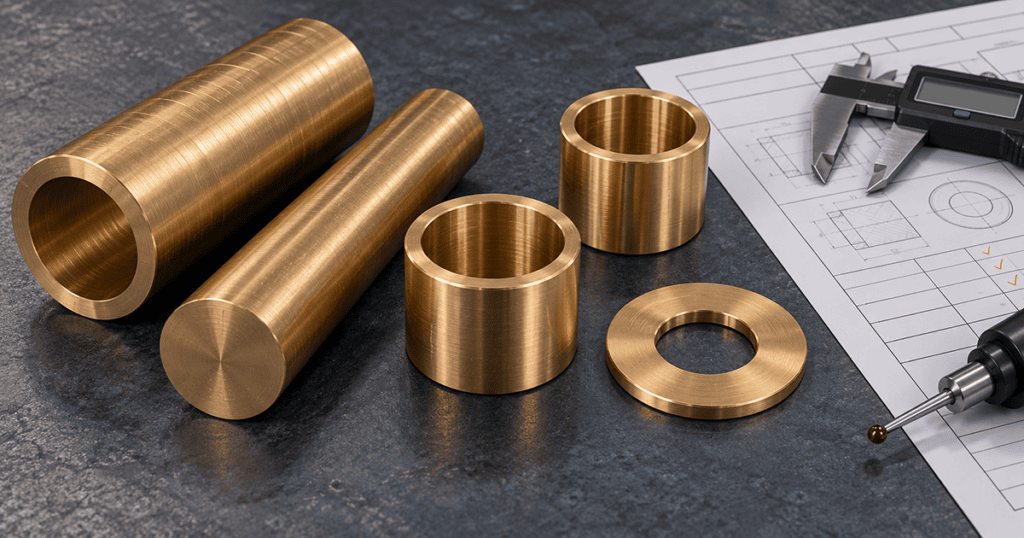
Bronze Metal for Machined Parts: Bearing Grades, Bushings, Wear and CNC Considerations