
Engineering Articles

Laser Marking for Automotive CNC Parts: Materials, Sequence, and Data Matrix DPM Verification
Automotive CNC parts get laser marked at a wavelength, in a sequence, and to a…

Titanium vs Stainless Steel: Ti-6Al-4V vs 316L for Aerospace and Medical Parts
Compare Ti-6Al-4V titanium and 316L stainless steel for CNC-machined aerospace and medical parts. Covers AMS…
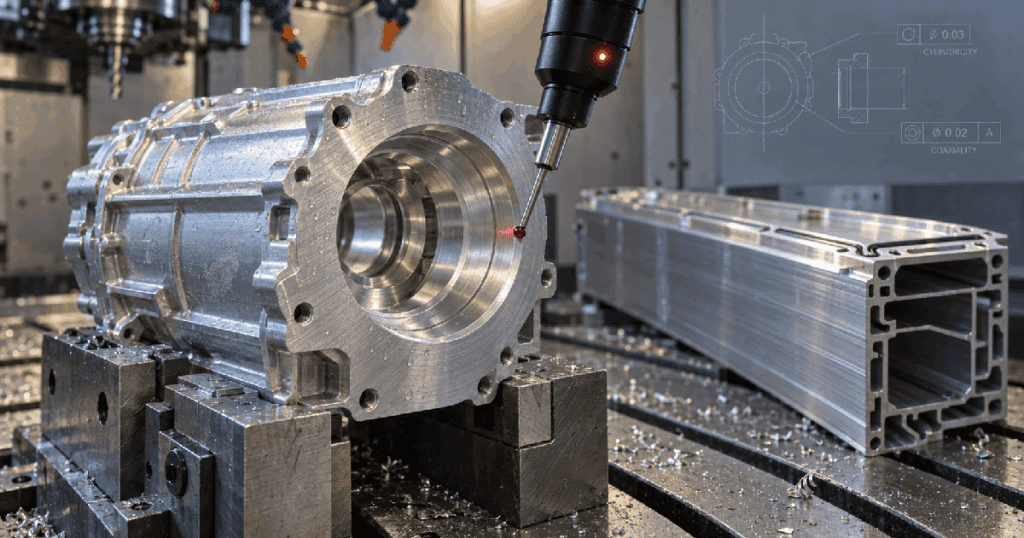
CNC Machining for EV Motor Housings and Battery Enclosures: What ISO 1101, IEC 60529, and ASTM B221 Require
ISO 1101:2017 governs GD&T language on motor housing bearing bores, not the tolerance values themselves….

Yield Strength vs Tensile Strength: How to Read Them for CNC Part Selection
Yield strength is the number you design a CNC part to; tensile strength is the…

Metal Strength Chart: Tensile, Yield, Hardness & Density for CNC Materials
Yield strength, tensile strength, Rockwell hardness, and density for eight CNC bar stock metals (6061-T6,…

Heat Treatment Before or After CNC Machining: When Each Sequence Works
The machining sequence around heat treatment depends on target hardness, tolerance grade, and how much…

Tight Tolerance Machining: Which CNC Features Need Tighter Control?
Assign tighter CNC tolerances only where variation can cause a defined functional failure. This guide…

Cast Iron vs Steel for CNC Machining: Grades, Machinability, and What Changes After Casting
Cast iron is not one material and neither is steel. Gray iron, ductile iron, and…

4140 Alloy Steel vs 1018 and 1045 Carbon Steel for CNC Parts
Choose 1018 when deep hardening is not required, 1045 when higher carbon and strength potential…

Aluminum Heat Sink Material Selection: 6061 vs 6063 vs 1050 Thermal Conductivity, and Why 5052 and 7075 Fall Short
6063-T5 conducts at about 209 W/m·K, 6061-T6 at 167 W/m·K, and 1050 at 229 W/m·K….